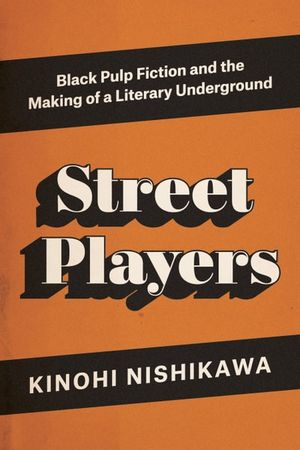

Street Players


Published by The University of Chicago Press
“A standout, a definitive and authoritative history.” —Shane Vogel, author of Stolen Time:Black Fad Performance and the Calypso Craze
From the late 1960s until its closure in 2008, Los Angeles' Holloway House specialized in cheap paperbacks with page-turning narratives featuring black protagonists in crime stories, conspiracy thrillers, prison novels, and Westerns. From Iceberg Slim's Pimp to Donald Goines's Never Die Alone, the thread that tied all of these books together—and made them distinct from the majority of American pulp—was an unfailing veneration of black masculinity. Street Players explores how this world of black pulp fiction was produced, received, and recreated over time and across different communities of readers.
Kinohi Nishikawa contends that black pulp fiction was built on white readers' fears of the feminization of society—and the appeal of black masculinity as a way to counter it. In essence, it was the original form of blaxploitation: a strategy of mass-marketing race to suit the reactionary fantasies of a white audience. But while chauvinism and misogyny remained troubling yet constitutive aspects of this literature, from 1973 onward, Holloway House moved away from publishing sleaze for a white audience to publishing genre fiction written by black authors for black readers—a field of cultural production that Nishikawa terms the black literary underground. But as Street Players demonstrates, this cultural authenticity had to be created, promoted, and in some cases made up, and there is a story of exploitation at the heart of black pulp fiction's origins that cannot be ignored.
BUY NOW FROM

COMMUNITY REVIEWS

