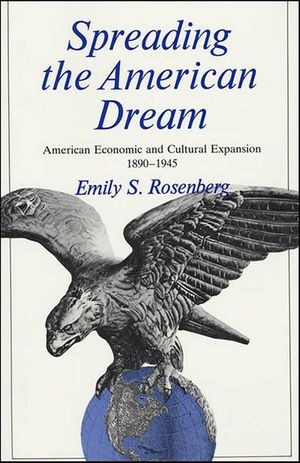

Spreading the American Dream


Published by Farrar, Straus and Giroux
“Provides fresh insights into the way governmental power was used to shape the American domestic marketplace, and how that visible hand was again used overseas.” —Walter LaFeber, Cornell University
This book urges us to consider whether the American Dream of promoting abundance, egalitarianism, and mobility avoided the pitfalls of exploitation and human degradation that most expansionist powers have fallen into. Emily Rosenberg examines the economic and cultural trends that accompanied America’s expansionist impulse during the first half of the twentieth century—expressed so eagerly by traders, investors, labor leaders, philanthropists, international societies, and pioneers of the mass media—and shows how U. S. foreign relations evolved from a largely private system to an increasingly public one and how, soon, the American dream became global.
“Looks at foreign policy in the broadest sense by examining industrial as well as cultural forces . . . A perceptive analysis of the promotional, cooperative, and regulatory functions of the American state . . . Clear, concise, and readable.” —Allan M. Winkler, University of Oregon
“[A] stimulating effort to bring some of the new social history to the study of foreign relations.” —William Appleman Williams, Oregon State University
BUY NOW FROM

COMMUNITY REVIEWS

