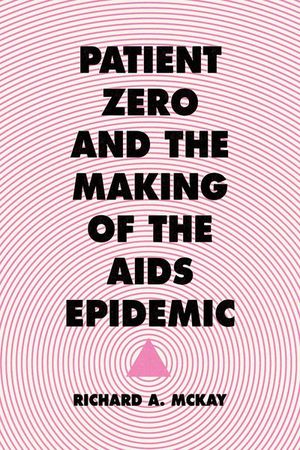

Patient Zero and the Making of the AIDS Epidemic


Published by The University of Chicago Press
“A dynamic new history of the early AIDS crisis in North America, superbly contextualized”—Now an award-winning documentary feature film (John Howard, author of Men Like That and White Sepulchres).
“This well-written book is a must-read for historians, practitioners, and activists.” —Peter Piot, London School of Hygiene & Tropical Medicine and founding executive director, UNAIDS
The search for a “Patient Zero”—popularly understood to be an epidemic’s first infected case—has been key to media coverage of major infectious disease outbreaks for more than three decades. Yet the term itself did not exist before the emergence of the HIV/AIDS epidemic in the 1980s. How did this idea so swiftly come to exert such a strong grip on the popular consciousness? In Patient Zero and the Making of the AIDS Epidemic, Richard A. McKay demonstrates how this seemingly new concept drew upon centuries-old ideas—and fears—about contagion and social disorder.
McKay presents a carefully documented account of the life of Gaétan Dugas, a gay man whose skin cancer diagnosis in 1980 took on very different meanings as the epidemic developed and who gained widespread posthumous infamy when he was incorrectly identified as Patient Zero of the North American outbreak. McKay shows how public health investigators inadvertently created the term amid their early research into the emerging health crisis; how an ambitious journalist dramatically amplified the idea in his determination to reframe national debates about AIDS; and how many individuals grappled with the notion of Patient Zero—adopting, challenging and redirecting its powerful meanings—as they tried to make sense of and respond to the first fifteen years of an unfolding epidemic in Canada and the United States. With important insights for our interconnected age, Patient Zero untangles the complex process by which individuals and groups create meaning and allocate blame when faced with new disease threats.
“A viscerally evocative and powerfully consequential study of the fear, stigma, and scapegoating pervasive in the early years of AIDS in North America. Deftly weaving together cultural, medical, and political history, McKay has given us a beautifully written study that integrates the experiences and attitudes of gay men with those of CDC epidemiologists, physicians and nurses on front lines, historians, and journalists.” —Naomi Rogers, author of Polio Wars: Sister Kenny and the Golden Age of American Medicine
BUY NOW FROM

COMMUNITY REVIEWS

