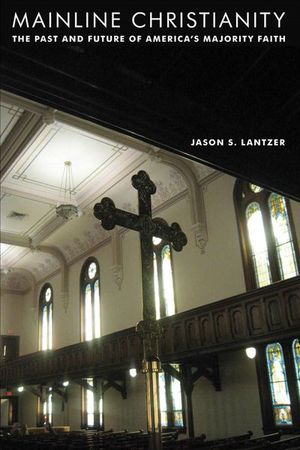

Mainline Christianity


Published by NYU Press
A history of the rise and decline of the Seven Sisters of American Protestantism—“A thoughtful, reasoned, and focused overview of this fascinating segment of American religious life” (Review of Religious Research).
Since the Revolutionary War, Mainline Christianity has been comprised of the Seven Sisters of American Protestantism—the Congregational Church, the Episcopal Church, the Evangelical Lutheran Church, the Presbyterian Church, the United Methodist Church, the American Baptist Convention, and the Disciples of Christ.
Since the nineteenth century, these denominations have been the dominant cultural representatives of how and where the majority of American Christians worship. Today, however, the Seven Sisters no longer represent most American Christians. The Mainline has been shrinking while evangelical and fundamentalist churches, as well as non-denominational congregations and mega churches, have been attracting more and more members.
In this comprehensive and accessible book, Jason S. Lantzer chronicles the rise and fall of the Seven Sisters, documenting the ways in which they stopped shaping American culture and began to be shaped by it. After reviewing and critiquing the standard decline narrative of the Mainline he argues for a reconceptualization of the Mainline for the twenty-first century, a new grouping of Seven Sisters that seeks to recognize the vibrancy of American Christianity.
“Provides a wide-ranging survey and trenchant critique of the history of mainline Christianity in America. Lantzer’s cautionary tale of the mainline’s decline offers a stimulating introduction to these denominations—Methodist, Lutheran, Episcopal, and others—which remain the church home for tens of millions of American Christians.” —Thomas S. Kidd, Baylor University, author of God of Liberty: A Religious History of the American Revolution
BUY NOW FROM

COMMUNITY REVIEWS

