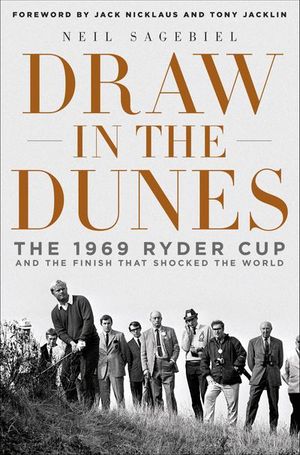

Draw in the Dunes


Published by St. Martin's Publishing Group
A gripping account of a legendary Cup competition and golf's greatest act of sportsmanship, by the author of the acclaimed golf history The Longest Shot.
“Sagebiel brings the memorable tournament to life. . . . [His] narrative is strongest when he reports the hole-to-hole proceedings, which is all the more remarkable since only three minutes of television footage were archived. He teases out drama and puts the reader on the green.” ―The Wall Street Journal
In 1969, the forty-two-year history of biennial golf matches between the United States and Great Britain reached its climax. The U.S., led by Jack Nicklaus, had dominated competitive golf for years; Great Britain, led by Tony Jacklin, was the undisputed underdog. But in spite of having lost fourteen of seventeen Ryder Cups in the past, the British entered the 1969 Ryder Cup as determined as the Americans were dominant. What followed was the most compelling, controversial, and contentious Ryder Cup the sport had ever seen.
Draw in the Dunes is a story of personal and professional conflict, from the nervousness displayed at the very beginning of the Ryder Cup matches—when one man could not tee his golf ball—to the nerve displayed by Nicklaus and Jacklin, who battled each other all the way to the final moment of the final match. Throughout the Cup, seventeen of the thirty-two matches were not decided until the final hole. Most electrifying was Nicklaus and Jacklin's contest, which decided the fate of the Ryder Cup. At the last putt, Nicklaus conceded to Jacklin, keeping the cup for the Americans while letting the British walk away with their most successful Ryder Cup result in years. From this event, which came to be known as “The Concession,” Nicklaus and Jacklin forged a lifelong friendship and ushered in a new era of golf.
“Golf journalist Sagebiel capably re-creates the action, leading up to the last-hole concession, which is now regarded both as a quintessential gesture of sportsmanship and as the beginning of the rebirth of the Ryder Cup. . . . Moving both backward and forward in time, Sagebiel gives rich context to what happened that day, showing why The Concession, as it is now called, occupies a unique place in golf history.” ―Booklist
“[An] enjoyably readable piece of sports history from Neil Sagebiel. . . . The details, interviews, research and clear writing make Draw in the Dunes an ace of a read for fans of good golf writing.” ―The Roanoke Times
BUY NOW FROM

COMMUNITY REVIEWS

