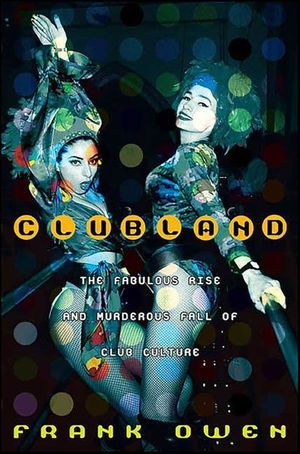

Clubland


Published by St. Martin's Publishing Group
This investigative reporter's six year journey behind the velvet ropes of Manhattan's infamous nightclub scene is “[an] addictive exposé” (Elle).
In 1995, journalist Frank Owen began researching a story on “Special K,” a new designer drug that fueled the after-midnight club scene. He went to buy and sample the drug at the internationally notorious Limelight, a decrepit church converted into a Manhattan disco, where pulse-pounding music, gender-bending dancers, and uninhibited sideshows attracted long lines of hopeful onlookers.
At first, Owen found an unexpected common ground between very different people: stockbrokers danced with transvestites, pacifier-sucking “club kids” with celebrities, thick-necked jocks with misfits. But as money flowed into the clubs, the music darkened, the drugs intensified, and the carnival spiraled out of control. Four men defined the scene, all of them outsiders. Peter Gatien rose from a small Canadian mill town to become the most powerful club operator in America; Michael Alig, a gay misfit from the Midwest, escaped to Manhattan where he won a legion of fashion-and-drug enamored followers; Lord Michael Caruso left Staten Island's bars for the rave parties of England, returning as clubland's leading drug dealer and techno music pioneer; and Chris Paciello began as a brutal Bensonhurst gang member, then recast himself as the glamorous prince of Miami Beach, partying with Madonna and Jennifer Lopez at the exclusive nightspots he created. Each of them had secrets that led them over the edge, and when clubland fell, it left behind tragic human consequences: the disillusioned, the strung out, and the dead.
A tour de force of investigative and participatory journalism, Clubland exposes a world built on illusion, where morality is ambiguous, identity changeable, and money the root of both ecstasy and evil.
BUY NOW FROM

COMMUNITY REVIEWS

